
OLU
WHAT’S IT TO YA?
Photos: Nayquan Shuler
Interview: Joe Kanzangu
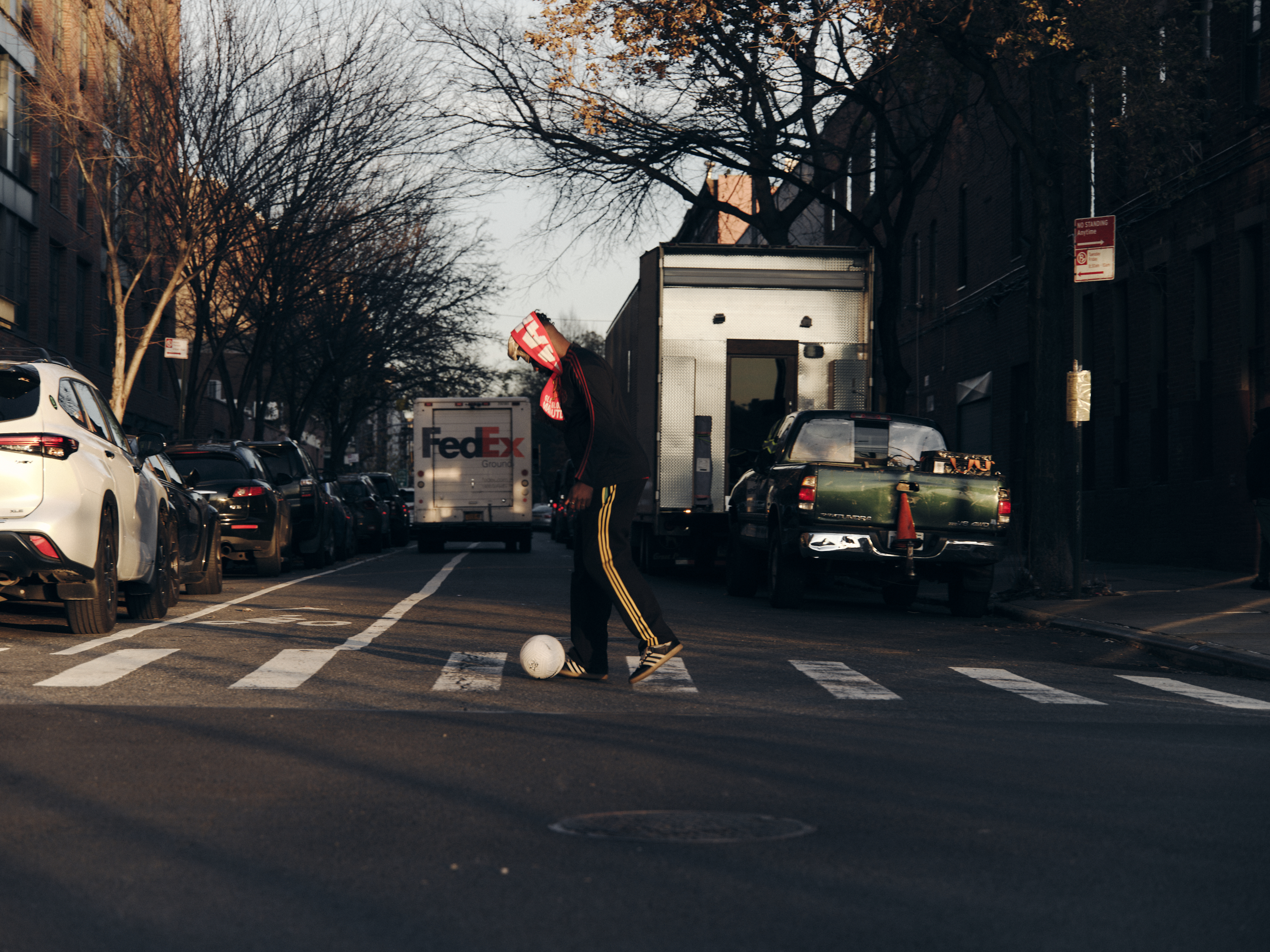
On a dark-satin summer night, just at the cusp of midnight, Black folks gather unwittingly stiff at an illustrious rooftop deck based between the Manhattan and Brooklyn bridges. It’s a lavish celebration marked by a brand’s first partnership with a Trinidadian artist. The artist is DJing and Emceeing, proudly premiering his debut by sparking the sounds that will move the crowd from the bar and off their seats to his soca-filled island, up the gold coast, and on to this distinguished plane.
“Nobody's dancing” a man remarks, turning to me before making his rounds dapping up people he knows and welcoming those he doesn’t. He walks in a truly liberated fashion. Understanding the difference between the sounds and the tepid movements bound by the setting’s cotillion era etiquette. He chooses to live unbounded. Soon enough everyone’s joining him on the dance floor. That’s Olu Alege.
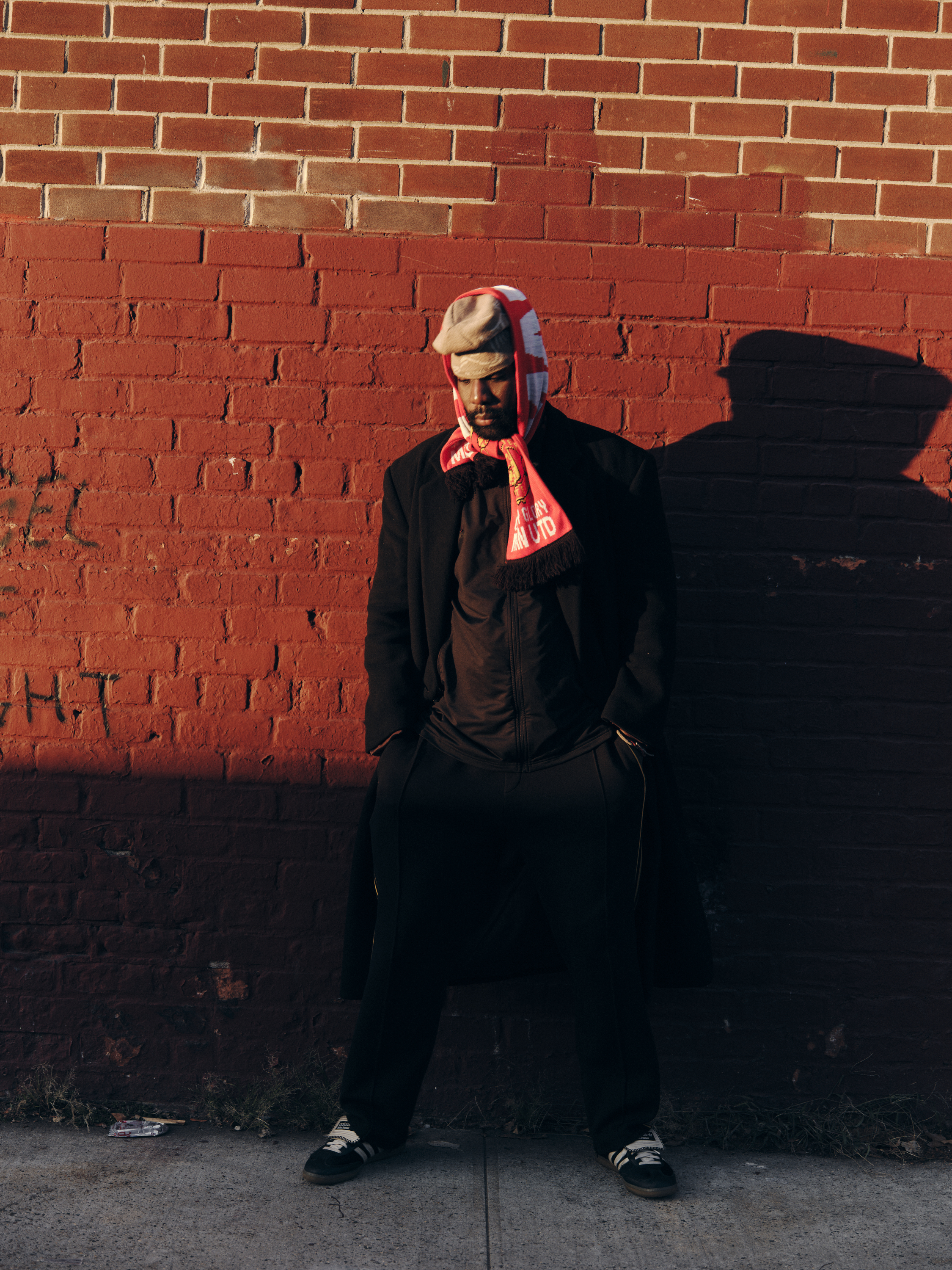
A Bronx Nigerian-American who carries a convalescent charge against the corporatization of culture. Olu’s the founder and senior strategist of No Noise, an impact agency that speaks through the lens of real people from cultures often imitated but never truly championed. With his agency he connects people, the ones he intentionally places himself around whether it be in New York, London, or Toronto, with leading global brands and institutions.
“Nobody's dancing” a man remarks, turning to me before making his rounds dapping up people he knows and welcoming those he doesn’t. He walks in a truly liberated fashion. Understanding the difference between the sounds and the tepid movements bound by the setting’s cotillion era etiquette. He chooses to live unbounded. Soon enough everyone’s joining him on the dance floor. That’s Olu Alege.
A Bronx Nigerian-American who carries a convalescent charge against the corporatization of culture. Olu’s the founder and senior strategist of No Noise, an impact agency that speaks through the lens of real people from cultures often imitated but never truly championed. With his agency he connects people, the ones he intentionally places himself around whether it be in New York, London, or Toronto, with leading global brands and institutions.

As a Bronx-born Nigerian, how was it growing up in New York City?
Growing up we didn’t have too many silos in the city. Which is what we have a lot of now. Everything back then was intertwined. Everyone hanging out with everybody.
Now you have your fashion people going to their own spots and other industry folks going to here and there. Now more than ever there’s a “you can’t sit with us energy.” For me, I don’t connect with that. That’s not my New York. Everything’s intermittent and there’s no clarity right now.
Is that why you came up with No Noise?
No Noise came through the lens of working in advertising. I saw that we often don’t own our own image. I was tired of people outside of the culture trying to dictate or sell us back our own culture. I wanted to build an agency that speaks through the perspective of real people. So it gave me a fight to not only provide third places but also to encourage folks to think about how we show up and talk about things.
Growing up we didn’t have too many silos in the city. Which is what we have a lot of now. Everything back then was intertwined. Everyone hanging out with everybody.
Now you have your fashion people going to their own spots and other industry folks going to here and there. Now more than ever there’s a “you can’t sit with us energy.” For me, I don’t connect with that. That’s not my New York. Everything’s intermittent and there’s no clarity right now.
Is that why you came up with No Noise?
No Noise came through the lens of working in advertising. I saw that we often don’t own our own image. I was tired of people outside of the culture trying to dictate or sell us back our own culture. I wanted to build an agency that speaks through the perspective of real people. So it gave me a fight to not only provide third places but also to encourage folks to think about how we show up and talk about things.

Going back to your New York
Yea I grew up valuing the random people that we meet at functions. The “how the fuck did I get here?” moments. So I want to be in a position to bring others up. So the fact that I see those in positions to effect change, connection, and conversation and they choose not to do that. That’s an issue for me.
Where did your love for the game come from?
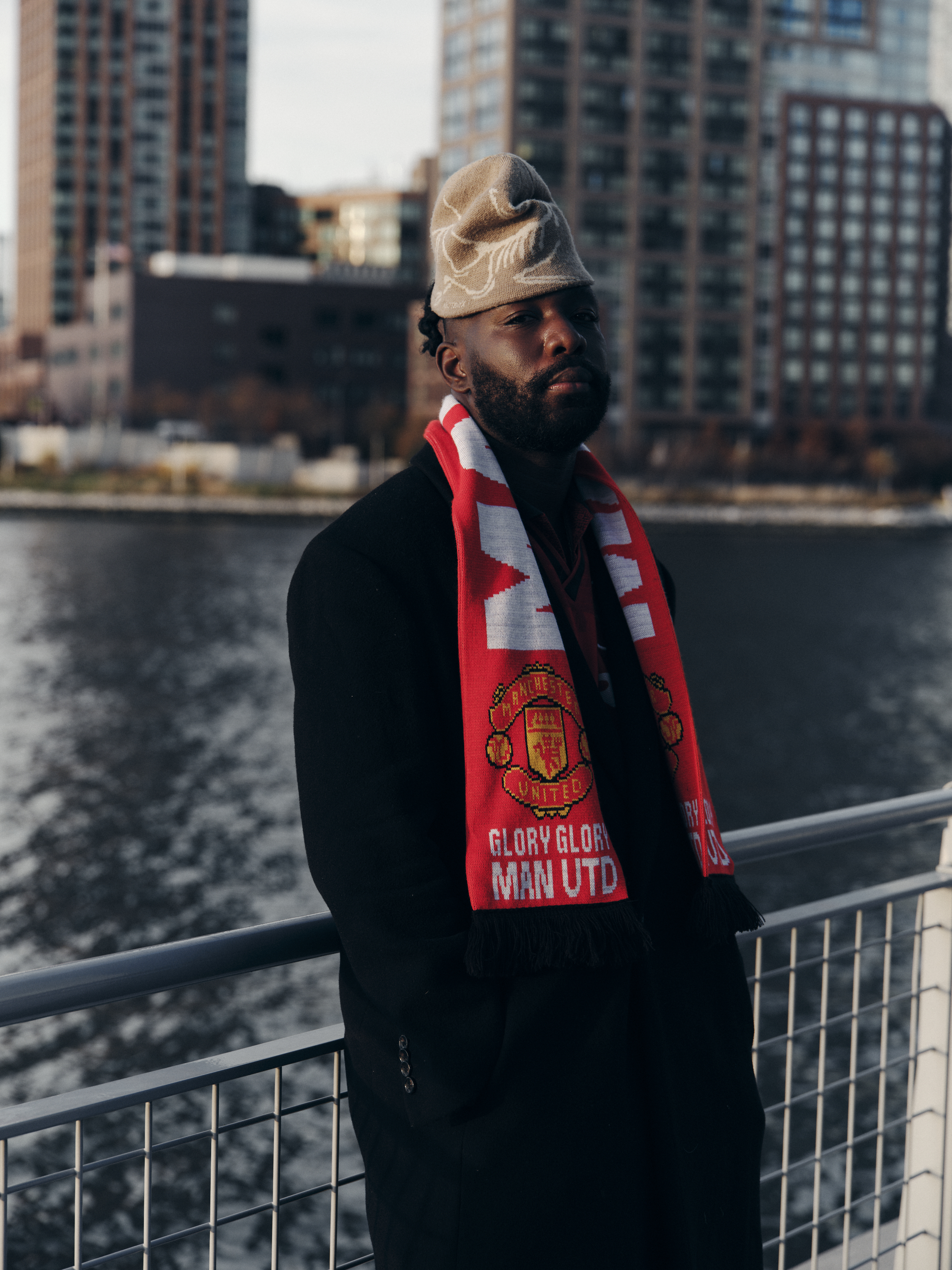
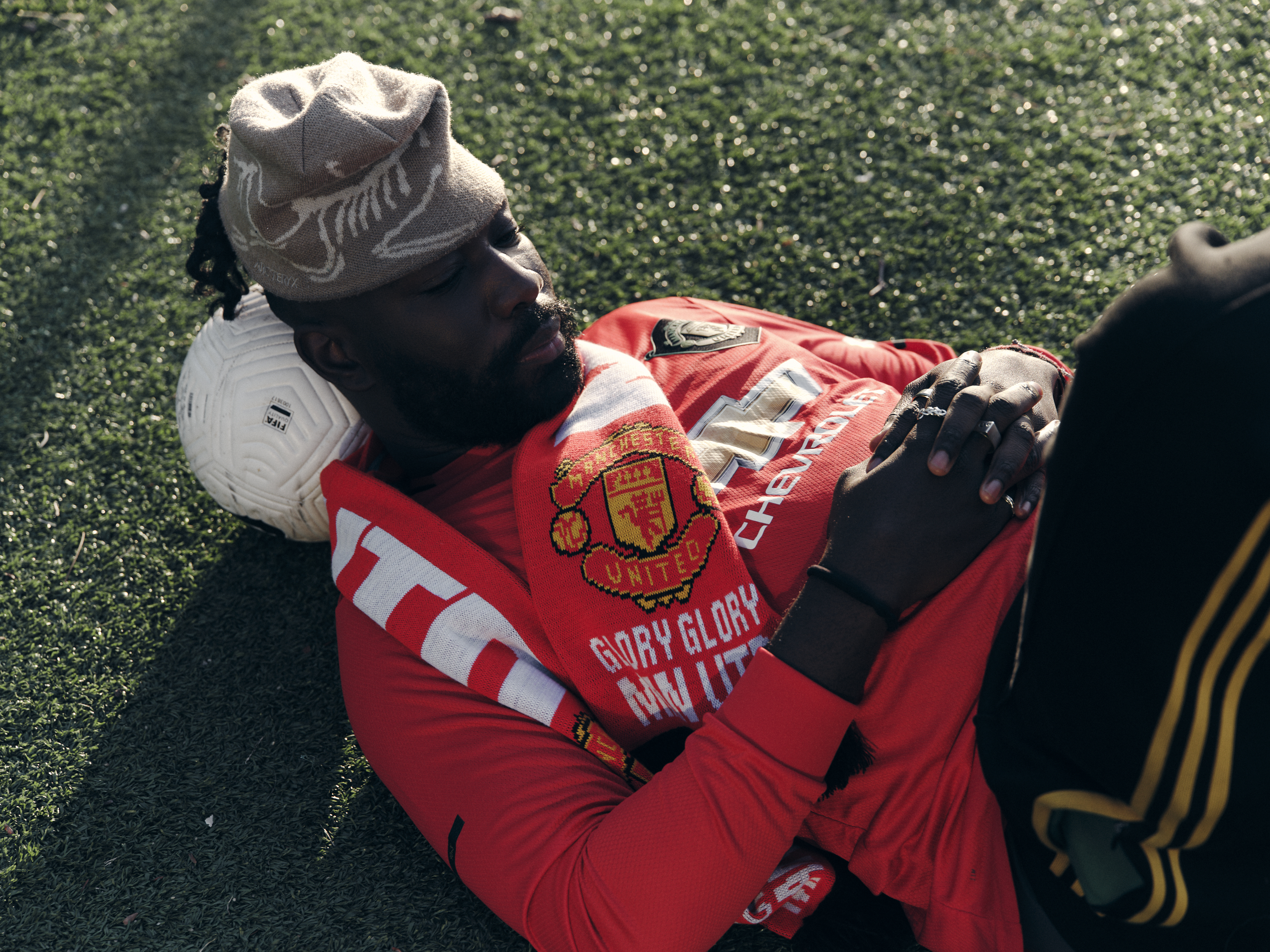
My route to football wasn’t a traditional one at all. I was a basketball head. I grew up in the golden era of Allen Iverson, Stephon Marbury, and Kobe Bryant. I spent more time watching that and playing ball everyday. So it was my stepdad who introduced me to the beautiful game. He would go, [in his Nigerian accent] “what are you doing outside? Come and watch this game with me!” And I’d push back that I didn’t want to watch soccer and I’d rather play video games but he was a United fan and he was persistent. So eventually I started watching it with him and started asking who are the Black people on this team even? “Where they at?” So I learned about Andy Cole and then learned about the legends like Dwight Yorke and then I’m watching the games and seeing the likes of Rooney, and how stocky and nice he was with it and I’m watching Ronaldo and he was just that guy. But prior to those two, when YouTube first came out, one of the first videos I ever saved was Ronaldinho juggling the ball (y’all know the one) I was like what is this? Who is this? His flair. Everything about him. His style. He was the one. On top of that, I was a big Kobe fan and he was a fan of Ronaldinho so for me it was an easy decision to make him my favorite player as well. Even though I was watching the prem with my stepdad and not LaLiga, that Youtube clip fortified Ronaldinho as the best player in the world. I would back him over R9, Messi, and Ronaldo even.
Yup.
And then I started playing FIFA and that opened the door even wider. I found myself trying to replicate Messi’s 91 goal season on feef. Playing the game taught me the magnitude of the rivalries between the likes of Vierra and Keane. I saw the evolution of the game with Mourinho’s Chelsea. I understood the legacy that’s created with prestige by Sir Alex Ferguson’s United. I saw what new money looked like with Manchester City coming in. Even though I talk mad shit about Arsenal, I can’t front, there’s a brotherhood there built on mutual respect.
In our culture, in the Bronx, even though soccer isn’t really an outlet for many it’s typically reserved for the alternative kids but having that connection to my Nigerian culture and being around my uncles when they would come over, it’d be Arsenal or Chelsea supporters versus United fans and it brought up a whole generation of haters. Those were the African and Caribbeans clubs and we would all come for each other. It developed our identities as we grew into it more.
Yea I grew up valuing the random people that we meet at functions. The “how the fuck did I get here?” moments. So I want to be in a position to bring others up. So the fact that I see those in positions to effect change, connection, and conversation and they choose not to do that. That’s an issue for me.
Where did your love for the game come from?
My route to football wasn’t a traditional one at all. I was a basketball head. I grew up in the golden era of Allen Iverson, Stephon Marbury, and Kobe Bryant. I spent more time watching that and playing ball everyday. So it was my stepdad who introduced me to the beautiful game. He would go, [in his Nigerian accent] “what are you doing outside? Come and watch this game with me!” And I’d push back that I didn’t want to watch soccer and I’d rather play video games but he was a United fan and he was persistent. So eventually I started watching it with him and started asking who are the Black people on this team even? “Where they at?” So I learned about Andy Cole and then learned about the legends like Dwight Yorke and then I’m watching the games and seeing the likes of Rooney, and how stocky and nice he was with it and I’m watching Ronaldo and he was just that guy. But prior to those two, when YouTube first came out, one of the first videos I ever saved was Ronaldinho juggling the ball (y’all know the one) I was like what is this? Who is this? His flair. Everything about him. His style. He was the one. On top of that, I was a big Kobe fan and he was a fan of Ronaldinho so for me it was an easy decision to make him my favorite player as well. Even though I was watching the prem with my stepdad and not LaLiga, that Youtube clip fortified Ronaldinho as the best player in the world. I would back him over R9, Messi, and Ronaldo even.
Yup.
And then I started playing FIFA and that opened the door even wider. I found myself trying to replicate Messi’s 91 goal season on feef. Playing the game taught me the magnitude of the rivalries between the likes of Vierra and Keane. I saw the evolution of the game with Mourinho’s Chelsea. I understood the legacy that’s created with prestige by Sir Alex Ferguson’s United. I saw what new money looked like with Manchester City coming in. Even though I talk mad shit about Arsenal, I can’t front, there’s a brotherhood there built on mutual respect.
In our culture, in the Bronx, even though soccer isn’t really an outlet for many it’s typically reserved for the alternative kids but having that connection to my Nigerian culture and being around my uncles when they would come over, it’d be Arsenal or Chelsea supporters versus United fans and it brought up a whole generation of haters. Those were the African and Caribbeans clubs and we would all come for each other. It developed our identities as we grew into it more.
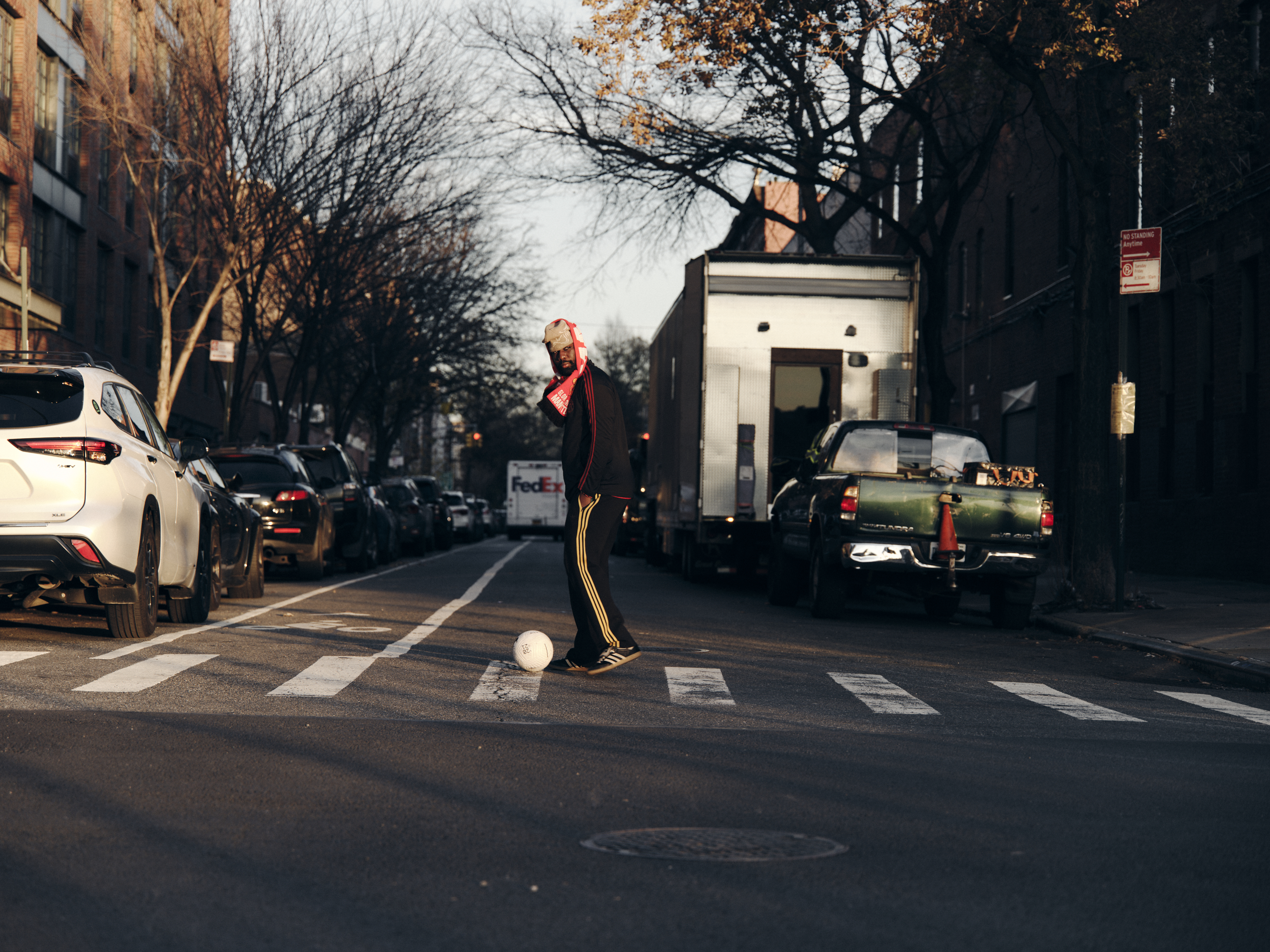
When it comes to America’s sports culture, we always talk about how dynamic and diverse the options are. How do you think soccer fits as part of that culture?
Culturally, soccer in America is still dictated by classist hierarchical structures. Public policies very much still dictate how people get involved in certain sports. I conducted a research study with Nike and Visa and it helped better frame the current layout of soccer in the US and we saw why kids in certain neighborhoods, area codes, and cities play specific sports. For example in New York soccer isn’t pushed in the city neighborhoods. There’s few organizational structures which means less access. And for the ones that exist there’s a huge pay-to-play model that reinforces elitism in that sport’s culture.
Besides travel expenses just to get out of the city, there’s not enough pitches in the city compared to basketball courts. D1 full-ride scholarships to play soccer are nonexistent in the US. So for a lot of these kids in the hood who are trying to get out of their circumstances playing soccer isn’t a practical solution. It’s more feasible to play basketball or football and get a free ride to Duke, NC State or Rutgers. So that’s a huge deterrent for the majority of kids and it leaves soccer to just the affluent kids. We don’t talk about that enough in America. There’s not enough funding, not enough [media] coverage, and not enough capital mobility in it so that’s why soccer is at a conundrum in mainstream culture.
So what’s it going to take to help America’s soccer identity?
It’s going to take immigrants to help level it up. It’s in need of a multicultural push. People with roots from Nigeria, Barbados, Mexico, Peru, and more. Outside of America soccer is an identity. But that’s not the case here. It’s too much of a leisure [activity] here in the states. But I am excited and proud of what's happening underground. I just hope with the World Cup coming the money gets on the ground and follows those grassroot programs and initiatives. There’s people starting people-focused soccer clubs here in New York, LA, and Atlanta. The love of the game is still here.
We have a huge underlayer of immigrants and inner city folks that understand the pure love for the game. They love the game and their first love is the Premier League or La Liga or AFCON. The brands haven’t understood how to celebrate that. They have it misconstrued that soccer culture in the US is just MLS and that’s so not true.
![]()
Culturally, soccer in America is still dictated by classist hierarchical structures. Public policies very much still dictate how people get involved in certain sports. I conducted a research study with Nike and Visa and it helped better frame the current layout of soccer in the US and we saw why kids in certain neighborhoods, area codes, and cities play specific sports. For example in New York soccer isn’t pushed in the city neighborhoods. There’s few organizational structures which means less access. And for the ones that exist there’s a huge pay-to-play model that reinforces elitism in that sport’s culture.
Besides travel expenses just to get out of the city, there’s not enough pitches in the city compared to basketball courts. D1 full-ride scholarships to play soccer are nonexistent in the US. So for a lot of these kids in the hood who are trying to get out of their circumstances playing soccer isn’t a practical solution. It’s more feasible to play basketball or football and get a free ride to Duke, NC State or Rutgers. So that’s a huge deterrent for the majority of kids and it leaves soccer to just the affluent kids. We don’t talk about that enough in America. There’s not enough funding, not enough [media] coverage, and not enough capital mobility in it so that’s why soccer is at a conundrum in mainstream culture.
So what’s it going to take to help America’s soccer identity?
It’s going to take immigrants to help level it up. It’s in need of a multicultural push. People with roots from Nigeria, Barbados, Mexico, Peru, and more. Outside of America soccer is an identity. But that’s not the case here. It’s too much of a leisure [activity] here in the states. But I am excited and proud of what's happening underground. I just hope with the World Cup coming the money gets on the ground and follows those grassroot programs and initiatives. There’s people starting people-focused soccer clubs here in New York, LA, and Atlanta. The love of the game is still here.
We have a huge underlayer of immigrants and inner city folks that understand the pure love for the game. They love the game and their first love is the Premier League or La Liga or AFCON. The brands haven’t understood how to celebrate that. They have it misconstrued that soccer culture in the US is just MLS and that’s so not true.
