
RACKY
WHAT’S IT TO YA?
Interview: Ketsia Nkumbu

If you’ve ever paused at a transit billboard, double-tapped a campaign on social media, or noticed a major brand rolling out a visually striking moment, chances are you’ve already seen Racky Sow’s touch. With her bold styling, fearless edge, and instinct for what’s next, Racky is quickly becoming one of the most exciting emerging voices in the fashion and creative direction space.
But beyond the standout looks and high-profile collaborations is a story rooted in culture, ambition, and vision. We sat down with her to talk about her upbringing, her Senegalese heritage, her goals within the fashion industry and, of course, her love of the beautiful game.
What was your upbringing like, coming from a Senegalese family and growing up in Montréal?
I grew up in a home where our roots were the foundation. My parents were intentional about keeping us deeply connected to our culture. My mom speaks to us in Wolof every single day, passing down everything from traditional recipes to the values of running a household, just as my grandmother taught her. We travelled back to Senegal regularly, not simply for vacations, but as a reminder of where we come from. Those trips reinforced the importance of family, humility, and identity. Growing up in Montréal while remaining deeply rooted in Senegalese traditions gave me a dual perspective, one that continues to shape how I move, create, and see the world today.
Montreal is one of the culturally diverse cities in the world. What makes the city so unique in your opinion?
Montréal’s strength & uniqueness lies in its diversity and its respect for craft. What I appreciate most is that people value skill, experience, and the lived realities that shape who someone becomes. We are not necessarily impressed by follower counts or proximity to fame; we care about what someone genuinely brings to the table. I have met and worked with incredibly talented creatives here, and that environment continuously pushes me to evolve. There is a collaborative spirit in Montréal that feels deeply human.
But beyond the standout looks and high-profile collaborations is a story rooted in culture, ambition, and vision. We sat down with her to talk about her upbringing, her Senegalese heritage, her goals within the fashion industry and, of course, her love of the beautiful game.
What was your upbringing like, coming from a Senegalese family and growing up in Montréal?
I grew up in a home where our roots were the foundation. My parents were intentional about keeping us deeply connected to our culture. My mom speaks to us in Wolof every single day, passing down everything from traditional recipes to the values of running a household, just as my grandmother taught her. We travelled back to Senegal regularly, not simply for vacations, but as a reminder of where we come from. Those trips reinforced the importance of family, humility, and identity. Growing up in Montréal while remaining deeply rooted in Senegalese traditions gave me a dual perspective, one that continues to shape how I move, create, and see the world today.
Montreal is one of the culturally diverse cities in the world. What makes the city so unique in your opinion?
Montréal’s strength & uniqueness lies in its diversity and its respect for craft. What I appreciate most is that people value skill, experience, and the lived realities that shape who someone becomes. We are not necessarily impressed by follower counts or proximity to fame; we care about what someone genuinely brings to the table. I have met and worked with incredibly talented creatives here, and that environment continuously pushes me to evolve. There is a collaborative spirit in Montréal that feels deeply human.

How has fashion come into your life, and how did you turn this passion into a career?
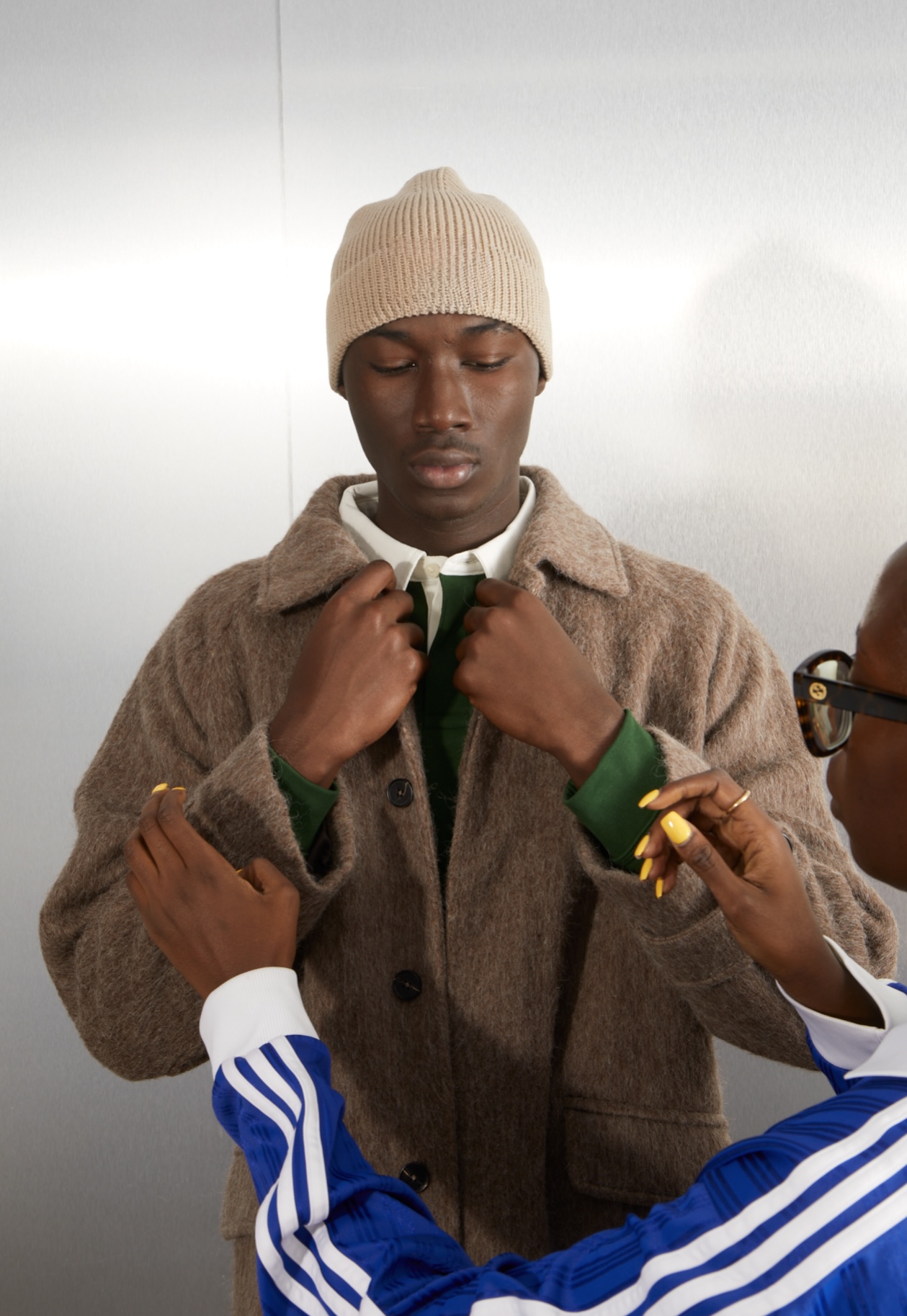
Fashion has always lived inside me. As a child, I was constantly sketching and creating mini magazines filled with my drawings. By high school, Tumblr had become my creative universe; the place where I discovered fashion icons like Virgil Abloh, Pharrell, Rihanna, A$AP Rocky, and A$AP Nast, and followed the different eras they each defined. I was immersed in that digital world, absorbing aesthetics and developing my taste long before I understood what any of it could mean professionally.
My parents always knew I was creatively inclined, but education was non-negotiable. Earning my bachelor’s degree was essential so I kept styling as a hobby, though truthfully, I still approach it with that same mentality, passion and sense of joy today. After graduating, something in me shifted. I became more intentional about my work and deeply focused. I started building my network strategically, securing international contracts, signing with my agent, and shaping my image with purpose. I haven’t stopped since.
Run us through a typical day in Racky’s life.
I love this question because it highlights the contrast between my #STYLEDBYRACKY online persona and my real life.
My life exists in duality. I balance a full-time marketing role at Nikon with my side hustle as a stylist, moving between offices and sets. When I am not in one of those spaces, I am at home. I am very grounded. I spend time with my friends, build Legos, watch reality TV, shop on SSENSE, and most importantly, spend a lot of time with my little sister, who is truly my best friend. We stay in, joke with our parents, go to the mall, try viral food spots, or simply enjoy each other’s company. That balance keeps me centred. The creative world can feel fast and performative, but my personal life is simple, intimate, and deeply rooted in family.
On slower days, I go into my closet and style a look, often pulling out my favourite pieces or personal staples to keep my image alive and continue shaping my visual narrative on my social media. I shoot almost everything myself using a timer, using my digital camera in the corners of my home. Most people do not realize how simple the setup behind my content actually is; a reminder that building an image does not require a big production, just creativity and consistency.
Fashion has always lived inside me. As a child, I was constantly sketching and creating mini magazines filled with my drawings. By high school, Tumblr had become my creative universe; the place where I discovered fashion icons like Virgil Abloh, Pharrell, Rihanna, A$AP Rocky, and A$AP Nast, and followed the different eras they each defined. I was immersed in that digital world, absorbing aesthetics and developing my taste long before I understood what any of it could mean professionally.
My parents always knew I was creatively inclined, but education was non-negotiable. Earning my bachelor’s degree was essential so I kept styling as a hobby, though truthfully, I still approach it with that same mentality, passion and sense of joy today. After graduating, something in me shifted. I became more intentional about my work and deeply focused. I started building my network strategically, securing international contracts, signing with my agent, and shaping my image with purpose. I haven’t stopped since.
Run us through a typical day in Racky’s life.
I love this question because it highlights the contrast between my #STYLEDBYRACKY online persona and my real life.
My life exists in duality. I balance a full-time marketing role at Nikon with my side hustle as a stylist, moving between offices and sets. When I am not in one of those spaces, I am at home. I am very grounded. I spend time with my friends, build Legos, watch reality TV, shop on SSENSE, and most importantly, spend a lot of time with my little sister, who is truly my best friend. We stay in, joke with our parents, go to the mall, try viral food spots, or simply enjoy each other’s company. That balance keeps me centred. The creative world can feel fast and performative, but my personal life is simple, intimate, and deeply rooted in family.
On slower days, I go into my closet and style a look, often pulling out my favourite pieces or personal staples to keep my image alive and continue shaping my visual narrative on my social media. I shoot almost everything myself using a timer, using my digital camera in the corners of my home. Most people do not realize how simple the setup behind my content actually is; a reminder that building an image does not require a big production, just creativity and consistency.

You have collected many kits over the years, a collection that keeps on growing. What are some of your favourite kits, and why?
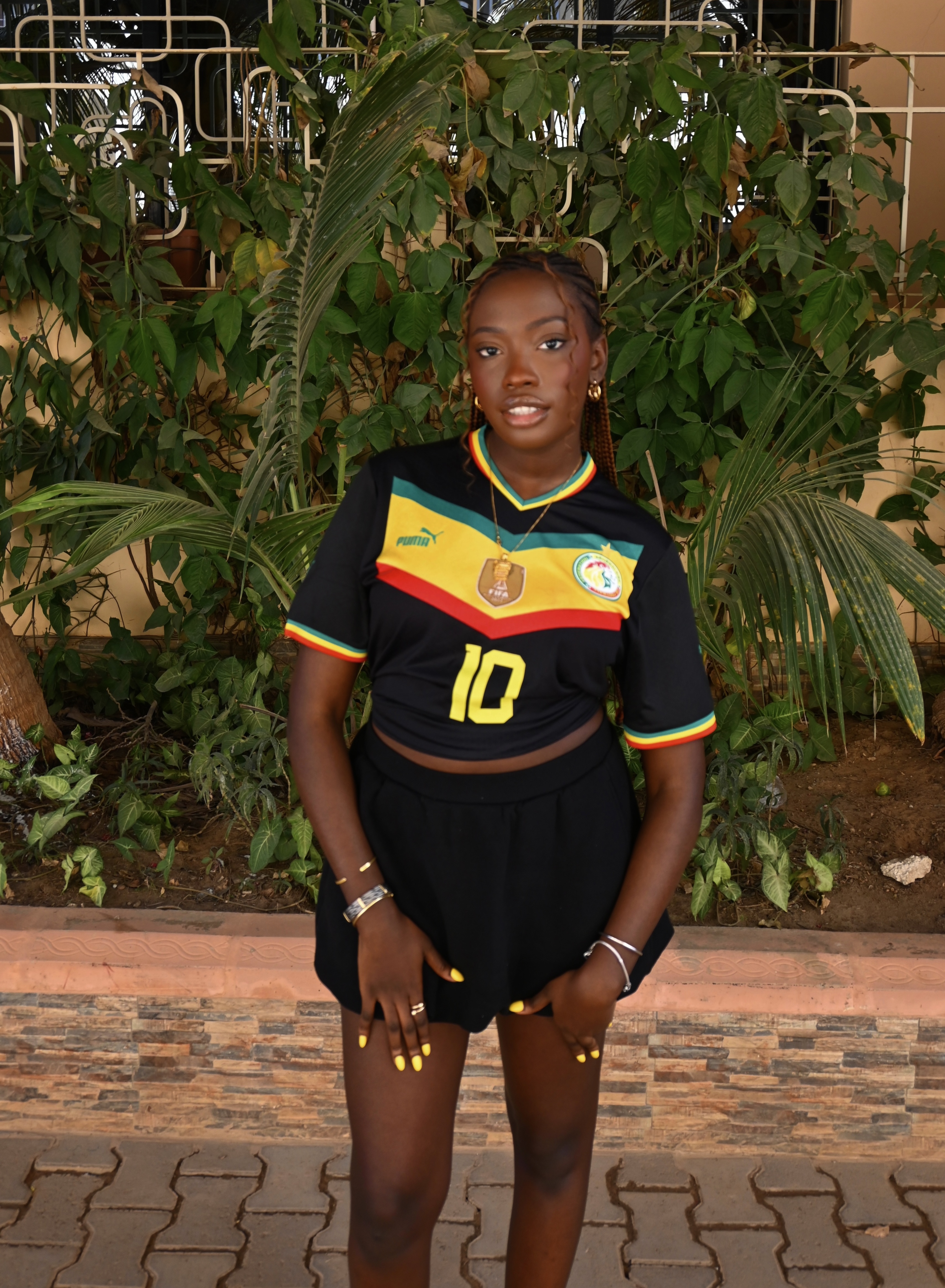
I own an unreasonable amount of jerseys, but the ones I treasure most are a 2013 Toni Kroos Bayern Munich home jersey and a 2011 Adidas Fenerbahçe jersey. I found them while thrift shopping in Barcelona a few years ago, and immediately texted my cousin in France before buying them. He is a football geek, and I always run my jersey finds by him so he can validate the players and teams. Both jerseys are especially meaningful to me because they are tied to that memory and have become a running joke between us.
You have recently created a football collection named After the Whistle. How has this project come about, and why was it important for you to create this collection?
The project was born during my 2024 trip back home to Senegal. We usually spend a few days in my father’s village located near the river that borders Senegal and Mauritania, miles away from Dakar. I am someone who constantly observes colours, textures, patterns, and people. Every day during that trip, I found myself photographing storefronts, ceramic tiles, street art and people's outfits; anything that visually moved me.
But it was while spending time in my father’s village that something shifted. I felt a deep sense of belonging and a quiet understanding that this was truly home. At that moment, I knew I needed to create something conceptual and rooted in identity, and After the Whistle became that expression. The jerseys allowed me to share a piece of myself while showcasing my creative capabilities beyond styling.
This past January, I returned home with my family, presented the collection, and personally donated the proceeds from the sales to our local football club. Seeing their reactions and hearing their words of gratitude made it one of the most emotional and fulfilling moments of my career so far.
For the people who will discover this collection for the first time, what do you want them to remember?
I want them to remember that the most valuable things in life exist in our immediate surroundings: our culture, our stories, our families. Inspiration is often closer than we realize, and this project taught me the importance of creating with intention.
2026 has kicked off brilliantly for Senegal, who were crowned Champions of Africa for the second time, in what one can consider a controversial yet inspiring final. Senegal continues to establish itself as a powerhouse not only in Africa, but in football as a whole. What do you think are the values and principles that make the country so captivating and inspiring to watch?
Senegal’s strength goes far beyond talent. It is rooted in discipline, unity, faith, and humility. There is a collective pride that does not come from ego, but from resilience. What captivates me most is the balance between excellence and values. Even at the highest level, the players carry themselves with integrity and a deep sense of responsibility toward their community. That emotional depth makes every victory feel even more powerful.
I own an unreasonable amount of jerseys, but the ones I treasure most are a 2013 Toni Kroos Bayern Munich home jersey and a 2011 Adidas Fenerbahçe jersey. I found them while thrift shopping in Barcelona a few years ago, and immediately texted my cousin in France before buying them. He is a football geek, and I always run my jersey finds by him so he can validate the players and teams. Both jerseys are especially meaningful to me because they are tied to that memory and have become a running joke between us.
You have recently created a football collection named After the Whistle. How has this project come about, and why was it important for you to create this collection?
The project was born during my 2024 trip back home to Senegal. We usually spend a few days in my father’s village located near the river that borders Senegal and Mauritania, miles away from Dakar. I am someone who constantly observes colours, textures, patterns, and people. Every day during that trip, I found myself photographing storefronts, ceramic tiles, street art and people's outfits; anything that visually moved me.
But it was while spending time in my father’s village that something shifted. I felt a deep sense of belonging and a quiet understanding that this was truly home. At that moment, I knew I needed to create something conceptual and rooted in identity, and After the Whistle became that expression. The jerseys allowed me to share a piece of myself while showcasing my creative capabilities beyond styling.
This past January, I returned home with my family, presented the collection, and personally donated the proceeds from the sales to our local football club. Seeing their reactions and hearing their words of gratitude made it one of the most emotional and fulfilling moments of my career so far.
For the people who will discover this collection for the first time, what do you want them to remember?
I want them to remember that the most valuable things in life exist in our immediate surroundings: our culture, our stories, our families. Inspiration is often closer than we realize, and this project taught me the importance of creating with intention.
2026 has kicked off brilliantly for Senegal, who were crowned Champions of Africa for the second time, in what one can consider a controversial yet inspiring final. Senegal continues to establish itself as a powerhouse not only in Africa, but in football as a whole. What do you think are the values and principles that make the country so captivating and inspiring to watch?
Senegal’s strength goes far beyond talent. It is rooted in discipline, unity, faith, and humility. There is a collective pride that does not come from ego, but from resilience. What captivates me most is the balance between excellence and values. Even at the highest level, the players carry themselves with integrity and a deep sense of responsibility toward their community. That emotional depth makes every victory feel even more powerful.
What is you favourite football memory with the Senegalese National Team?
My favorite memory with the Senegalese National Team is from my most recent trip to Senegal. I watched every game in fan zones and at home, surrounded by family and strangers who quickly felt like relatives. I was there from the very beginning of the series through our win against Mali, which secured our place in the final, before heading back to Montreal. The energy of watching the matches and celebrating in the streets after each victory was surreal. Football unites us in a way that is hard to articulate and there is an immediate sense of belonging that is deeply embedded in Senegalese football culture. I will never forget those moments and the intensity of the emotions we lived through.
Do you have a favourite Senegalese player, and why?
The obvious answer is Sadio Mané, but for everything he represents. What stands out to me most is that he puts his values first, both on and off the pitch. He is a source of immense pride for Senegal, not only for his achievements and what he has done for our country, but for the human being he is. My father actually met him in Mecca this past November, just before AFCON. They were staying at the same hotel and my father described him as humble and grounded. That is a story I cannot wait to tell my children one day!
We are seeing the emergence of fashion and football collabs for the past couple of years- who would you like to see Sénégal collaborate with?
I would love to see the FSF collaborate with Grace Wales Bonner. What she has built with Adidas is a masterclass in cultural translation. She does not simply reference heritage; she studies it, archives it, and reconstructs it through tailoring, proportion, and textile research. Her Adidas collaborations feel ceremonial. They are rooted in diasporic identity, and that sensitivity would resonate deeply with our National Football team. Senegalese fashion is about precision in tailoring, richness in fabric, and quiet authority in silhouette. I could see a collaboration that merges football culture with our traditional craftsmanship.
![]()
My favorite memory with the Senegalese National Team is from my most recent trip to Senegal. I watched every game in fan zones and at home, surrounded by family and strangers who quickly felt like relatives. I was there from the very beginning of the series through our win against Mali, which secured our place in the final, before heading back to Montreal. The energy of watching the matches and celebrating in the streets after each victory was surreal. Football unites us in a way that is hard to articulate and there is an immediate sense of belonging that is deeply embedded in Senegalese football culture. I will never forget those moments and the intensity of the emotions we lived through.
Do you have a favourite Senegalese player, and why?
The obvious answer is Sadio Mané, but for everything he represents. What stands out to me most is that he puts his values first, both on and off the pitch. He is a source of immense pride for Senegal, not only for his achievements and what he has done for our country, but for the human being he is. My father actually met him in Mecca this past November, just before AFCON. They were staying at the same hotel and my father described him as humble and grounded. That is a story I cannot wait to tell my children one day!
We are seeing the emergence of fashion and football collabs for the past couple of years- who would you like to see Sénégal collaborate with?
I would love to see the FSF collaborate with Grace Wales Bonner. What she has built with Adidas is a masterclass in cultural translation. She does not simply reference heritage; she studies it, archives it, and reconstructs it through tailoring, proportion, and textile research. Her Adidas collaborations feel ceremonial. They are rooted in diasporic identity, and that sensitivity would resonate deeply with our National Football team. Senegalese fashion is about precision in tailoring, richness in fabric, and quiet authority in silhouette. I could see a collaboration that merges football culture with our traditional craftsmanship.
